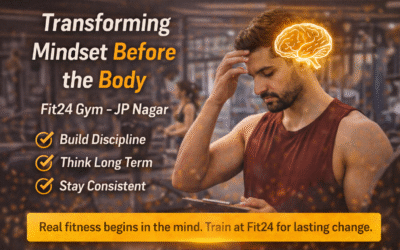
Most working professionals don’t struggle with fitness because they lack information.
They struggle because long work hours drain energy, consistency, and decision-making.
That’s why a recent real-life experiment caught our attention. A working professional decided to run 5 kilometers every day for one week, despite having a demanding 9–5 job. No fancy equipment. No extreme diet. Just a daily commitment.
The physical changes were noticeable.
But the real lesson goes much deeper than running.
The Hardest Part Was Not the Run
It Was Showing Up Daily
Running 5 km is not impossible.
What makes it difficult is doing it after a full workday, when the body is tired and the mind is exhausted. This highlights a truth many people avoid:
Fitness doesn’t fail because people are lazy.
It fails because they rely on motivation instead of routine.
Motivation is inconsistent.
Discipline only works when supported by structure.
Why Discipline Alone Isn’t Enough for Long-Term Results
In the first week, the runner experienced clear improvements in stamina, focus, and confidence. These early wins often create the belief that the approach is working.
But the body also began sending warning signals. Muscle soreness increased, fatigue started to accumulate, and recovery became essential. This is where many fitness journeys begin to break down.
Short-term intensity creates movement, but without structure, it also creates burnout.
Running daily or pushing hard may work briefly, but long-term transformation requires more than repetition. It requires a balanced system that supports the body as it adapts and improves.
Sustainable progress depends on:
-
Strength training to support joints and muscles
-
Planned recovery to prevent injuries and burnout
-
Progressive overload instead of daily extremes
-
A routine that evolves as fitness levels change
When effort is not supported by structure, people feel drained and eventually stop. Not because they lack discipline, but because discipline alone cannot carry them forward.
Real transformation is not about doing more.
It’s about doing the right things, in the right order, consistently.
What this teaches to busy Professionals like you?
If you work full-time, your fitness routine must:
-
Fit realistically into your schedule
-
Reduce guesswork and decision fatigue
-
Protect your body as intensity increases
-
Deliver measurable, visible progress
Remember
Relying only on willpower makes fitness unpredictable.
A structured training system turns effort into results.
An unstructured routine turns effort into exhaustion.
The Real Lesson From This Experiment
This story is not really about running 5 km.
It proves that consistency is possible, even with a busy job. But it also exposes the limit of self-driven routines.
Serious transformation does not come from doing more.
It comes from doing the right things, in the right order, consistently.
You can read the original article here:
source: India Today Health
FAQs
Is running 5 km every day a good idea for busy professionals?
Running daily can improve stamina in the short term, but without proper recovery and strength training, it can lead to fatigue or injury. A balanced routine works better long term.
Why do people lose consistency even after a strong start?
Most people rely on motivation instead of structure. When fatigue builds and recovery is ignored, progress slows and consistency breaks down.
Along with discipline, what do we need to achieve long-term fitness results?
Discipline is important, but it needs structure. Without a planned routine, recovery, and progression, even disciplined efforts can lead to burnout.
Get answer to your Questions
Build a structured training routine that fits your life and delivers real results.